

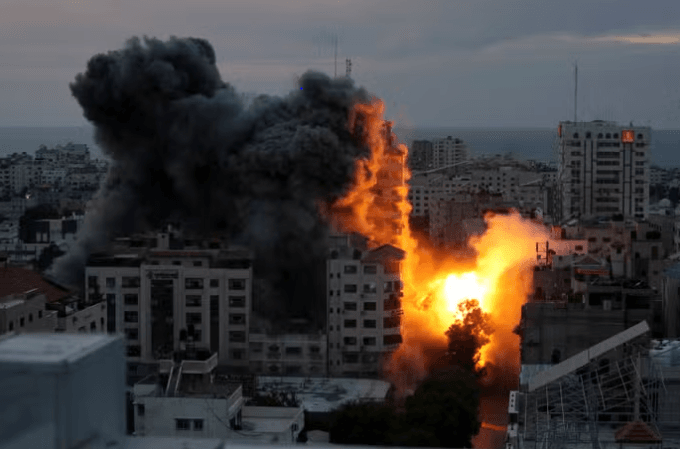
Israel Strikes Gaza, Killing Over 300 Including Many Children – LIVE Updates & Analysis
LIVE Updates on Israel-Gaza Conflict
The ongoing Israel-Gaza conflict continues to unfold with devastating impacts on civilians. Over 300 Palestinians, including children, have been killed in Israeli airstrikes across Gaza. Stay updated with the latest news from reliable sources:
In the latest round of airstrikes, Israel has launched deadly attacks on Gaza, killing over 300 Palestinians, with children among the victims. This marks a major escalation of the ongoing conflict, which has already resulted in widespread devastation and a staggering loss of life. As the violence intensifies, the situation in Gaza becomes more critical, with over 61,700 Palestinians reported dead and thousands more wounded. In addition to the military strikes, Israel has issued forced displacement orders for residents in northern Gaza, causing further upheaval for the already displaced population.
This blog post aims to provide a detailed analysis of the ongoing conflict, the latest developments, and the humanitarian crisis that is unfolding in Gaza.
The Escalation: Israeli Airstrikes Target Gaza
Israeli airstrikes have once again targeted Gaza in an effort to disrupt Hamas operations. The strikes have caused significant damage to residential buildings, schools, and public infrastructure. These buildings, many of which had been converted into shelters for displaced civilians, have now turned into death traps. The intense bombing, especially in western Gaza City, has left many people dead or severely injured.
Key Points on the Attacks:
- Death Toll: Gaza’s Health Ministry has confirmed that at least 61,700 Palestinians have died as a result of the conflict. Many of the victims are children, with medical officials reporting the loss of over 300 lives in the latest wave of attacks.
- Target Areas: The Israeli military has focused its strikes on residential areas, medical facilities, and infrastructure, including evacuation centers that had been converted into makeshift shelters for civilians fleeing from other bombed regions.
- Destruction of Evacuation Centers: In a tragic twist, many of the evacuees who sought refuge in these centers have become casualties of the bombings, further complicating efforts to provide relief to the people of Gaza.
Hamas and Palestinian Islamic Jihad Respond to the Attacks
Hamas and Palestinian Islamic Jihad have condemned the Israeli strikes, accusing the Israeli military of breaching the ceasefire agreement. Hamas described the attack as “treacherous,” claiming it was an effort by Israel to overturn the Gaza ceasefire deal. The Palestinian Islamic Jihad echoed similar sentiments, accusing Israel of deliberately sabotaging the ceasefire.
Hamas’s Statement:
Hamas issued a statement condemning Israel for violating the ceasefire agreement, accusing them of “deliberately attacking defenseless civilians in Gaza” in an attempt to break the ceasefire deal that had been in place since January 19. The group vowed to continue fighting Israel until its demands were met.
Israel’s Forced Displacement Orders
In a dramatic development, Israel has issued forced displacement orders for Palestinians living in the northern parts of Gaza, including the areas of Beit Hanoun, Khirbet Khuza’a, Abasan al-Kabira, and Abasan al-Jadida. These areas have been declared “dangerous combat zones,” and residents have been instructed to evacuate immediately.
Areas Affected:
- Beit Hanoun
- Khirbet Khuza’a
- Abasan al-Kabira
- Abasan al-Jadida
Israeli spokesperson Avichay Adraee has urged civilians to head to shelters in safer locations, such as western Gaza City or Khan Younis. However, with the ongoing airstrikes and the already overwhelmed shelters, the displaced civilians are facing even more danger.
International Reactions and US Involvement
International responses to Israel’s renewed airstrikes on Gaza have varied. The United States, traditionally a strong ally of Israel, has been caught in a difficult position. Some analysts suggest that the US sees the airstrikes as a “negotiating tactic,” designed to pressure Hamas into revising the ceasefire agreement. However, the full extent of the US’s stance on the issue remains unclear, and it is yet to be seen whether they will intervene in any meaningful way to de-escalate the violence.
US Analyst’s Perspective:
Mouin Rabbani, a Middle East analyst, suggested that the US might view Israel’s deadly bombing campaign as a way to push Hamas into agreeing to a revised ceasefire. He raised concerns that the US could be giving Israel the green light to derail the ceasefire process completely, potentially escalating the violence even further.
The Humanitarian Crisis in Gaza:
The ongoing military campaign has turned Gaza into a humanitarian disaster zone. Hospitals are overwhelmed with casualties, and medical supplies are running low. The World Health Organization (WHO) has raised alarms about the need for medical treatment outside Gaza, but Israeli authorities have closed the Rafah crossing, preventing patients from leaving the enclave.
Key Challenges:
- Overwhelmed Hospitals: Gaza’s medical facilities are under severe strain, unable to accommodate the large number of injured people.
- Closure of Rafah Crossing: Israeli Defence Minister Israel Katz has ordered the closure of the Rafah crossing, preventing critically injured patients from receiving treatment in Egypt or other neighboring countries.
- Lack of Medical Supplies: Medical facilities in Gaza are facing shortages of essential supplies, making it difficult to treat the wounded and manage the public health crisis.
Israeli Hostage Crisis:
Meanwhile, Israel’s ongoing military actions in Gaza are complicating efforts to secure the release of Israeli hostages held by Hamas. Families of the hostages have accused the Israeli government of abandoning negotiations for their return, as the government’s primary focus has shifted back to military operations.
Family Reactions:
Families of Israeli captives have expressed anger and frustration at the Israeli government’s handling of the situation. They claim that Israel’s decision to resume airstrikes before securing the release of the remaining hostages risks the lives of those still being held by Hamas.
Israeli Government’s War Aims:
Israel’s Defence Minister Israel Katz has made it clear that Israel will continue its military operations in Gaza until all hostages are returned and Hamas is neutralized. Katz emphasized that Israel’s war aims include the complete elimination of Hamas’s military capabilities.
Conclusion:
The situation in Gaza remains increasingly dire, as the ongoing violence, forced displacement, and widespread destruction continue to devastate the region. In recent days, Israeli airstrikes have taken the lives of hundreds of Palestinians, leaving families shattered and grieving the loss of their loved ones. These strikes, along with the ongoing bombardment of residential areas and essential infrastructure, have worsened the humanitarian crisis that has been unfolding for months.
Compounding the crisis, Israel has issued forced displacement orders for thousands of Palestinians in northern Gaza, displacing families who had only recently returned to their homes after earlier evacuations. The closure of the Rafah crossing, which had previously allowed the passage of some humanitarian aid and medical patients, has further exacerbated the suffering. Thousands of wounded Palestinians, unable to receive the medical care they urgently need, are left stranded, with no means of escaping the horrors of the conflict.
As the violence continues to escalate, the international community watches in alarm, yet diplomatic solutions seem increasingly distant. The region is caught in a cycle of retaliatory attacks, with no clear pathway to peace. The situation raises important questions about the long-term prospects for stability in Gaza and the broader Middle East. It is clear that a sustainable and lasting resolution will require not only a ceasefire but a concerted effort from both regional powers and international actors to address the underlying political, humanitarian, and territorial issues that continue to fuel the conflict.
The world now faces the urgent challenge of responding to the immediate needs of those affected while working toward a more comprehensive and enduring peace that addresses the grievances and aspirations of all parties involved. Until then, the people of Gaza continue to endure unimaginable hardship, as they navigate the daily realities of violence, displacement, and loss.
Stay informed on the latest updates from the conflict by following these live sources:
- Times of India Live Updates
- Al Jazeera Live Updates
- Image Credits : TOI/Screenshot