


Meta Takes on Sarah Wynn-Williams Over Careless People Memoir: Legal Battle and Public Response
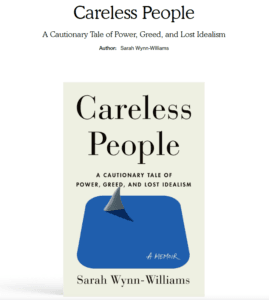
Meta (formerly Facebook) has found itself in the middle of a controversial legal battle with former employee Sarah Wynn-Williams, who published a memoir titled Careless People: A Cautionary Tale of Power, Greed, and Lost Idealism. This memoir sheds light on her time working at Facebook (now Meta) and offers a critical look at the company’s practices, particularly its relationship with China. In this blog, we’ll explore the details of the case, the legal challenges, and the growing public interest in the book.
The Legal Dispute: Meta’s Attempt to Block Careless People
Meta recently won a legal victory in an arbitration case against Sarah Wynn-Williams, a former employee who worked at Facebook from 2011 to 2017. The company argued that Wynn-Williams violated a non-disparagement agreement she signed upon leaving the company. As a result, the arbitrator temporarily prohibited her from promoting or distributing her memoir, Careless People, until a full arbitration concludes.
However, despite this legal pushback, Careless People remains available for purchase, and its sales have actually surged. The book was ranked as the third bestselling book on Amazon just days after the ruling. This phenomenon is known as the Streisand Effect, where efforts to suppress something only lead to increased publicity.
Meta’s Legal Statement and Response
Meta has described Careless People as a mix of outdated claims and false accusations, particularly targeting their executives. The company’s spokesperson also stated that Wynn-Williams was terminated eight years ago for poor performance. Despite the legal ruling, Meta maintains that the book’s content does not accurately represent the company.
On the other hand, the publisher of Careless People, Macmillan’s Flatiron Books, has strongly defended the book, stating that the arbitrator’s decision doesn’t affect their support for the author. They criticized Meta’s attempts to silence Wynn-Williams through legal tactics, calling them an attack on free speech.
For more about the arbitration ruling, you can read the official document here.
What’s Inside Careless People?
Wynn-Williams’ memoir provides a rare inside look at Facebook, offering a behind-the-scenes glimpse into the company’s global public policy operations. She discusses her disillusionment with Facebook’s internal culture and decision-making, particularly its efforts to expand into China.
The book also delves into uncomfortable interactions between Wynn-Williams and Joel Kaplan, Meta’s VP of Global Public Policy. She accuses Kaplan of inappropriate behavior at a work event, which Meta has denied after conducting an internal investigation.
One of the more shocking revelations in the book is Wynn-Williams’ claim that Facebook considered installing a “chief editor” in China to censor content in accordance with the country’s strict policies. Meta later decided against this move, but it raises questions about the company’s ethical considerations in expanding globally.
Wynn-Williams has also made headlines with a whistleblower complaint, alleging that Facebook’s efforts to operate in China included plans to allow the government to censor content. This claim was brought before the U.S. Securities and Exchange Commission (SEC) in 2015.
You can read more about this in the review of Careless People by The New York Times.
Public Reaction: The Memoir Gains Momentum
While Meta is trying to suppress the book’s distribution, Careless People has gained a lot of attention. Some former Facebook employees have criticized the memoir, calling it inaccurate. Mike Rognlien, a former Meta staffer, claimed that the book was filled with lies.
However, other readers and critics have found the book to be an eye-opening account of Facebook’s internal struggles. As Sarah Wynn-Williams herself said in a recent interview with Business Insider, the backlash from Meta and former colleagues is more about avoiding the real questions than addressing her claims.
Meta’s History with China and Censorship
Wynn-Williams’ book raises several key questions about Facebook’s historical interest in China. In particular, the company’s attempts to gain access to the Chinese market have been controversial. In 2015, Facebook reportedly explored ways to comply with Chinese censorship laws, including the potential appointment of a “chief editor” who could censor content on behalf of the Chinese government.
Meta’s spokesperson has since clarified that the company does not operate its services in China today and stated that their past efforts to enter the market were widely reported years ago. Mark Zuckerberg himself had even addressed this issue publicly in 2019, confirming that Facebook ultimately decided against pursuing these plans.
To understand more about Meta’s attempts to operate in China, check out this detailed Washington Post article.
Conclusion: What’s Next for Careless People?
As the legal battle between Meta and Sarah Wynn-Williams continues, the public’s curiosity about Careless People is only increasing. While Meta’s attempt to silence the author through legal means may have backfired, it’s clear that the book has captured public interest.
Whether or not you agree with Wynn-Williams’ portrayal of Facebook, her story is an important contribution to the conversation around corporate ethics, transparency, and the role of whistleblowers in holding tech companies accountable. As the book continues to climb the bestseller list, it’s evident that Careless People will remain a point of discussion for a long time to come.
Sources:
- Macmillan’s Official Page on Careless People
- Meta’s Statement on the Legal Ruling
- Business Insider Interview with Sarah Wynn-Williams
- NY Times Review of Careless People
- Washington Post on Meta and China