
Apple iPhone 17 Series and the Curious Case of iPhone Air: A Masterclass in Marketing Over Innovation
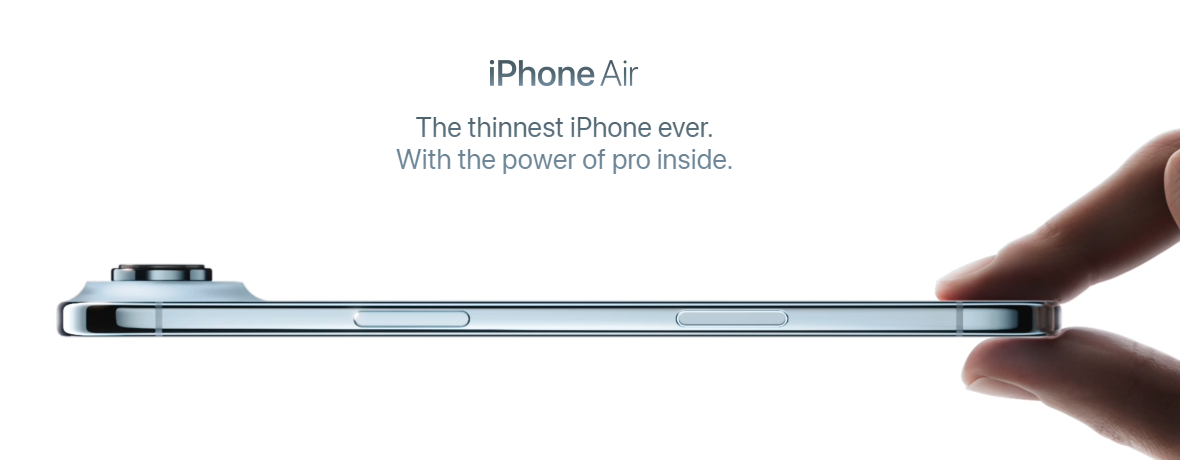
Apple’s latest launch — the iPhone 17 series — continues the brand’s legacy of delivering sleek devices, precision engineering, and ecosystem-first experiences. As expected, the core lineup includes the iPhone 17, 17 Pro, and 17 Pro Max. But this year, Apple has introduced something new: the iPhone Air.
At face value, it appears to be another mid-tier addition. But beneath the surface, this device is far more interesting — not because of what it offers, but because of what it represents.
In this article, we explore the strategic thinking behind the iPhone Air, how it fits into Apple’s product and marketing ecosystem, and why it might be Apple’s most calculated move in recent years — even if not the most innovative.
The Lineup: What’s New?
The iPhone 17 series introduces a refined design language, AI-powered internal enhancements, and tighter integration with iOS 19. As always, the Pro and Pro Max models receive the lion’s share of attention, featuring exclusive chip upgrades, ProMotion displays, and camera system overhauls.
But the headline-stealer this year is the iPhone Air — a model that, for many, seems to appear out of nowhere.
On paper, it’s a modest device with minor design tweaks, improved connectivity features, and a new naming convention. But in Apple’s tightly controlled product strategy, nothing is ever accidental.
Understanding the iPhone Air: What It Is — and Isn’t
Let’s get this out of the way first: the iPhone Air is not a flagship. It doesn’t bring innovation, groundbreaking performance, or any feature that truly sets it apart in the Apple ecosystem.
So why does it exist?
1. Replacing the Failed ‘Plus’ Concept
Apple has experimented with various mid-tier variants before — the “Plus” models being a prime example. Historically, these models have underperformed. They lacked the performance of the Pro, and the affordability of the base model. As a result, they often failed to justify their existence.
The iPhone Air is Apple’s way of retiring the “Plus” branding and replacing it with something far more marketable.
The “Air” label is not new — Apple has used it effectively with the MacBook Air and iPad Air. The name itself implies sleekness, lightness, and trendiness. It appeals to a younger demographic, and sounds premium without actually being premium.
It’s branding genius — and Apple knows it.
2. Capturing Attention, Not Market Share
The iPhone Air isn’t designed to dominate the market in terms of units sold or revenue generated. It’s designed to fuel conversations, to trend on launch day, and to give tech media something fresh to dissect.
By introducing a new name into an otherwise familiar lineup, Apple accomplishes several objectives:
- Adds freshness without significant R&D investment
- Drives social media buzz and consumer curiosity
- Expands media coverage without shifting focus from Pro models
It’s the classic bait — and it works.
3. Filtering Customers with Intentional Flaws
One of the most telling signs of the iPhone Air’s role in Apple’s ecosystem is its compromised battery life.
While Apple hasn’t highlighted this in its keynote, early insights confirm that the Air lags behind the iPhone 17 and 17 Pro in terms of battery performance. For a device released in 2025, this isn’t a technical limitation — it’s a deliberate product decision.
Here’s why that matters:
Customers who are detail-conscious — the ones who read spec sheets, compare performance, and expect all-day battery life — will instantly recognize the Air’s limitations. And those customers will instinctively move up the ladder to the iPhone 17 Pro or Pro Max.
It’s a classic marketing funnel.
The iPhone Air is not built to convert power users. It’s built to attract attention, set expectations, and gently push customers toward more profitable models.
The Real Focus Remains on the Pro Lineup
While the Air attracts headlines, Apple’s true investment this year — both in innovation and intent — remains centered on the Pro and Pro Max.
These models feature:
- A19 Pro chip with neural engine upgrades
- Camera systems nearing DSLR levels
- Battery life enhancements
- AI-first software features built into iOS 19
In short, these are the devices Apple wants its core audience — professionals, creators, and tech-savvy users — to buy.
The iPhone Air, in contrast, is a decoy with just enough flair to create noise, but not enough substance to disrupt the sales hierarchy.
Why This Strategy Works
Apple has long mastered the art of market positioning — releasing products that complement rather than compete with each other. The iPhone Air exemplifies this principle.
It’s not here to redefine the smartphone.
It’s here to create the illusion of choice, enhance product segmentation, and expand the brand’s reach without compromising its high-margin business.
The genius lies not in the product itself, but in its timing, branding, and psychological positioning.
By launching the Air alongside the Pro models, Apple:
- Makes the Pro models appear more powerful by contrast
- Avoids the stagnation of a 3-model launch
- Reinforces the narrative that Apple has something for everyone — even if that “something” isn’t exceptional
The Bottom Line: Innovation Takes a Backseat to Strategy
To the average consumer, the iPhone Air is just another iPhone. But for those who look closer, it’s a case study in how a trillion-dollar company manages attention, perception, and profit — all with a single product line.
The iPhone Air isn’t a failure.
It’s a controlled success — engineered not to dominate, but to redirect, realign, and reinforce Apple’s ecosystem strategy.
Whether or not it delivers value is beside the point.
It delivers attention, and in today’s economy, that’s often far more valuable.
Your Turn: What Do You Think?
Is the iPhone Air a clever tactic or an unnecessary addition?
Would you consider buying it — or do you see through the strategy?
Let us know in the comments, and stay tuned for our next deep-dive article:
“Is the iPhone 17 Series Worth the Upgrade?”